PRODUCTS CENTER
Ashless Dispersants
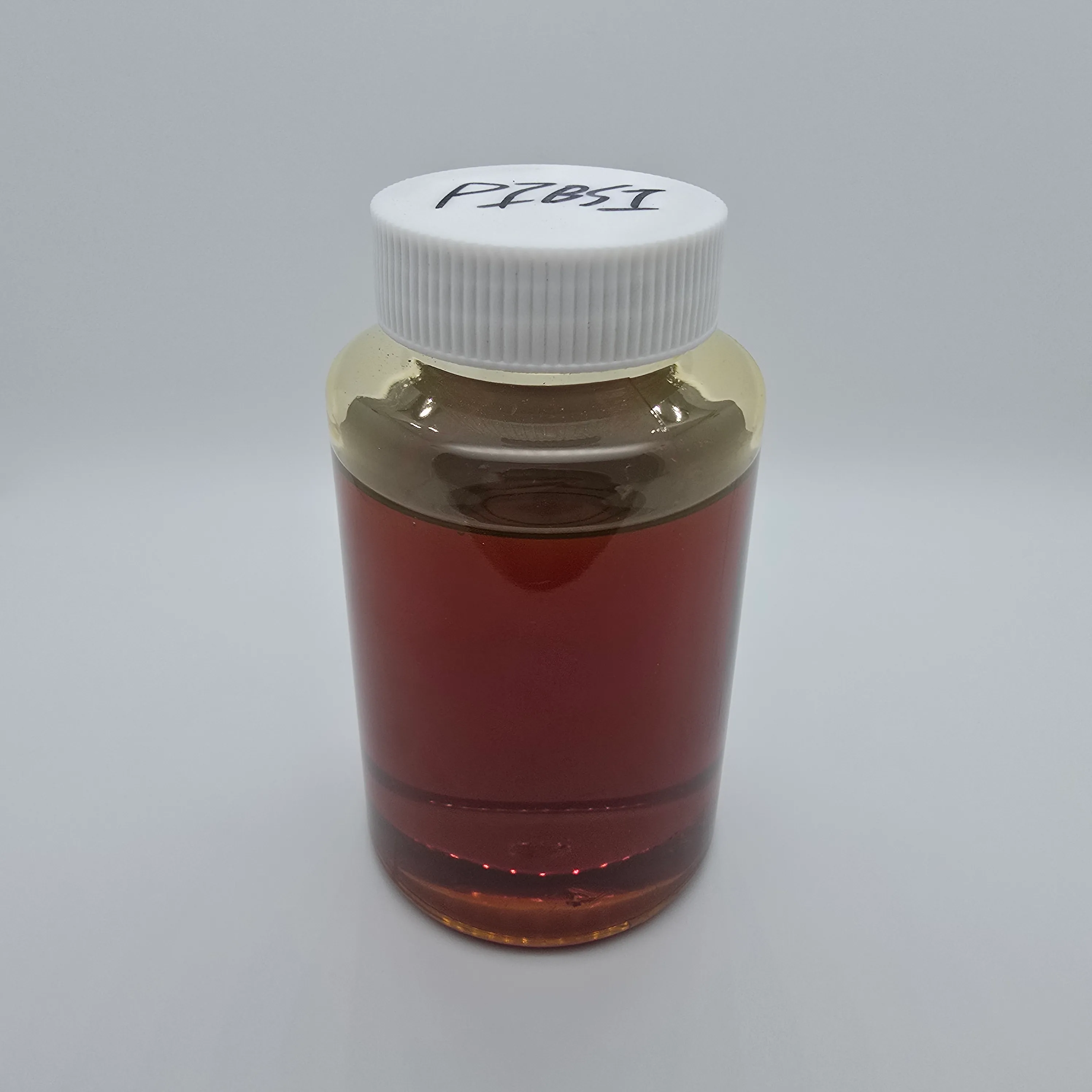
Ashless PIBSI dispersants for engine oils: mono, bis, boronated & high-MW types. Soot & sludge suspension, thermal process, chlorine-free. Jinzhou factory.
What Are Ashless Dispersants?
Ashless dispersants are metal-free lubricant additives that keep engines clean by suspending insoluble contaminants — soot, sludge, varnish precursors, and carbon particles — in the bulk oil, preventing them from agglomerating and depositing on critical surfaces. "Ashless" means exactly what it says: unlike metallic detergents (calcium, magnesium sulfonates/phenates), dispersants contain no metal atoms. When the oil eventually burns in the combustion chamber, dispersants leave no ash residue. This matters for two reasons: ash can form abrasive deposits on piston crowns and exhaust valves, and modern emissions-control catalysts are poisoned by metallic ash carryover. In an engine oil formulation, dispersants are typically the highest-concentration additive after the viscosity modifier, at 3–7 wt% of the finished oil.
The dominant chemistry is polyisobutylene succinimide — PIBSI for short — synthesized by reacting PIBSA (polyisobutylene succinic anhydride) with polyalkylene polyamines. The PIB tail provides oil solubility; the succinimide polar head associates with contaminant particles. At the CheMost factory in Jinzhou, PIBSI is manufactured via the thermal process — no chlorine, no residual chlorides — ensuring compliance with the tightening environmental standards that have driven the industry away from the older chlorination route. Industry synonyms include "ashfree dispersant," "PIBSI dispersant," "succinimide dispersant," and "non-metallic dispersant."
How Do Ashless Dispersants Work?
The mechanism has three stages: association, steric stabilization, and suspension. First, the polar succinimide group attaches to the surface of individual soot particles, resin molecules, and oxidized deposit precursors — these are the very materials that would otherwise agglomerate through dipolar interactions or stick to hot metal surfaces. The PIB tail, a highly branched hydrocarbon chain of 1,000–2,300 molecular weight, extends into the surrounding oil, creating a steric barrier that physically prevents particle-to-particle contact. Once coated, the dispersant-wrapped particles remain suspended in the circulating oil until the next drain interval removes them.
This is distinct from how detergents work. Detergents neutralize acidic combustion by-products (sulfuric acid, nitric acid, organic acids) through chemical reaction — their calcium or magnesium carbonate reserve base is consumed in acid neutralization. Dispersants do not neutralize acids to any meaningful degree (amines are weak bases, providing minimal TBN); their function is purely physical — keep the junk suspended until the oil is changed. The two additives work as a complementary system: detergents prevent deposit formation on hot surfaces (>200°C) like piston crowns and ring grooves; dispersants prevent deposit formation on cooler surfaces (<200°C) like rocker arm covers and oil pans, where sludge and varnish dominate.
Key performance indicators: soot-handling capacity — the amount of soot a dispersant can suspend before oil viscosity spikes (critical in heavy-duty diesel engines, measured via ASTM D7156 or Mack T-8 engine test); sludge control — measured in the Sequence VG (gasoline) and Sequence VH (diesel) engine tests; and seal compatibility — nitrogen-based dispersants can attack fluoroelastomer (Viton) seals if low-molecular-weight amine species are present (boronation mitigates this). A well-formulated PIBSI dispersant with negligible free amine content passes ASTM D7216 (Viton seal test) cleanly.
Dispersants vs. Detergents — What's the Difference?
These two additive classes are bought and used together so often that the distinction gets blurred. The confusion has a simple source: both keep engines clean. But they do it through completely different mechanisms. Detergents are metallic soaps (calcium sulfonate, calcium phenate, magnesium sulfonate) with a reserve base of metal carbonate that neutralizes acids formed during combustion. They operate primarily on hot surfaces — piston rings, ring grooves, crown lands — preventing the formation of hard carbon deposits and lacquer. When detergents burn, they leave ash (calcium/magnesium oxides and sulfates). Dispersants are metal-free polymers that physically suspend contaminants in the oil. They operate primarily in the cooler regions of the engine — crankcase, rocker covers, oil galleries — where sludge and varnish form. They leave no ash.
Three key differences: Metal content. Detergents contain magnesium, calcium, or barium; dispersants contain none. Acid neutralization. Detergents provide TBN (total base number) — typically 50–400 mgKOH/g for overbased grades — to neutralize sulfuric and nitric acid from fuel combustion. Dispersants have TBN of 20–40 mgKOH/g from amine groups, offering minimal acid neutralization. Molecular weight. Dispersants are 4–15 times larger (3,000–7,000 Da for polymeric dispersants) than the organic portion of detergent soaps. This size advantage makes dispersants far more effective at suspending particles — the long PIB chains physically shield contaminant particles from agglomeration. For a deeper dive on the detergent side, see detergents & TBN boosters.
Ashless Dispersant Chemistry Types
All commercial PIBSI dispersants share the same backbone: a polyisobutylene (PIB) tail connected via a succinimide bridge to a polyamine polar head. But within this family, four structural variations produce meaningfully different performance profiles. The key variables: PIB molecular weight (determines oil solubility and viscosity contribution), mono-succinimide vs. bis-succinimide architecture (determines nitrogen content and dispersancy per molecule), and post-treatment (boronation to add antiwear and seal-compatibility benefits). CheMost manufactures all four types at the Jinzhou plant using the thermal PIBSA route — zero chlorine from feedstock to finished PIBSI.
| Type | Structure & Key Specs | Key Strengths | Main Limitation |
|---|---|---|---|
| Mono-Succinimide | Lower nitrogen (1.8–2.5% N). Single imide linkage per PIB chain. Lower molecular weight than bis types. | Best low-temperature dispersancy for gasoline engine oils. Lower viscosity contribution helps cold-cranking specs. | Lower soot-handling capacity. Less effective in heavy-duty diesel applications. |
| Bis-Succinimide | Higher nitrogen (3.5–5.5% N). Two PIB tails per molecule. Industry standard PIBSI. | Workhorse for gasoline and diesel oils. Higher dispersancy per unit mass. Better high-temperature deposit control. | Higher viscosity contribution. Free amine content requires careful manufacturing control. |
| Boronated PIBSI | 0.3–1.5% boron. Boron crosslinks amine groups. Same PIB backbone as non-boronated parent. | Multi-functional: dispersancy + antiwear + friction reduction. Improved Viton seal compatibility. Better oxidative stability. | Higher cost. Slightly lower dispersancy per nitrogen atom. Hydrolytic stability concerns in wet environments. |
| High-MW PIBSI | PIB tail ≥2,300 MW. Longer hydrocarbon tail. Available in standard and boronated versions. | Superior high-temperature deposit control. Partial VII credit reduces VII treat rate. Better soot dispersion in EGR diesels. | Highest viscosity contribution. Can limit treat rate in low-viscosity oils. Highest cost per kg. |
Thermal Process vs. Chlorine Process — Why Manufacturing Route Matters
PIBSI quality starts with how the PIBSA precursor is made. Two routes exist: the thermal ene reaction (PIB + maleic anhydride heated >200°C, no catalyst, no chlorine) and the chlorine-assisted Diels-Alder reaction (chlorine gas promotes PIB-to-diene conversion for maleic anhydride addition). The thermal process requires high-reactivity PIB with terminal vinylidene double bonds; the chlorine process works with any PIB isomer but leaves residual organic chlorides (typically 0.1–0.5%) in the finished PIBSI. These chlorides are environmental liabilities — they can form dioxins under incineration conditions — and are increasingly restricted under EU REACH and similar regulations. CheMost uses exclusively the thermal route. For formulators serving markets with tightened halogen limits, thermal-process PIBSI is not a premium option — it is the only compliant option.
How to Select an Ashless Dispersant
- Diesel vs. gasoline engine oil — soot vs. sludge. Heavy-duty diesel engine oils (HDEO) fight soot — carbon particles from incomplete diesel combustion that aggregate and cause oil thickening. Bis-succinimide (standard PIBSI) at 4–7 wt% is the baseline choice, with high-MW PIBSI (T161) added for EGR-equipped engines where soot loads are highest. Gasoline engine oils fight low-temperature sludge — an emulsion of water, fuel, and oxidized oil that forms during stop-and-go driving. Mono-succinimide dispersants excel here because their lower viscosity contribution helps meet cold-cranking (CCS) limits. Most PCMO formulations use a mono/bis blend.
- Nitrogen content and TBN contribution. PIBSI dispersants contribute 20–40 mgKOH/g TBN from their amine groups — useful but not sufficient alone. Bis types deliver higher nitrogen (and thus higher TBN) per kilogram of additive. If your formulation needs every TBN unit (marine engine oils, high-sulfur fuel applications), bis-succinimide at the upper end of the treat range maximizes the dispersant-side TBN contribution. But dispersants are not a substitute for detergent TBN — the calcium/magnesium carbonate reserve is what does the heavy acid-neutralizing work.
- Seal compatibility — the Viton problem. Fluoroelastomer (Viton) seals are standard in modern engines. Free primary and secondary amines in PIBSI — residuals from incomplete reaction with the anhydride — diffuse into the seal material, react with the polymer backbone, and cause hardening, shrinkage, and eventual leakage. Boronated PIBSI (T154B, T161B) is the standard fix: boric acid reacts with free amines, tying them up as stable boron-nitrogen complexes. For any formulation subject to ASTM D7216 or OEM Viton seal tests, boronated grades or dispersants with <0.3% free amine content are strongly preferred.
- Viscosity contribution — treat rate vs. cold-cranking. Every kilogram of PIBSI added to the oil increases viscosity, especially at low temperature. This is the dispersant's biggest practical limitation. Mono-succinimide has the lowest viscosity penalty and is preferred for 0W-16 and 0W-20 oils. High-MW PIBSI (T161) provides some VII credit — its long PIB tail contributes to high-temperature viscosity — but can push cold-cranking viscosity (CCS at -30°C) over the limit if over-treated. Run CCS and MRV (mini-rotary viscometer) on the finished formulation, not just the base oil + dispersant.
- Boronated or not? The antiwear trade-off. Boronated PIBSI adds antiwear and friction-reduction functionality — boron forms a glassy borate film on metal surfaces under boundary lubrication — but at a cost: boron content appears on the oil's elemental analysis, and some OEM specs cap boron (typically at 300–500 ppm). In zinc-free or low-ZDDP formulations, boron from the dispersant can be a useful antiwear contributor. In formulations already at the phosphorus limit from ZDDP, the additional antiwear from boronated PIBSI may be redundant. Check your target elemental fingerprint before selecting.
- Chlorine content — a regulatory gate. If the finished oil is destined for the EU market or for OEMs with REACH-compliant supply chain requirements, chlorine-free manufacturing is a hard requirement. Thermal-process PIBSI contains zero halogen; chlorine-process PIBSI typically contains 0.1–0.5% residual organic chlorine. CheMost's PIBSI, made from thermal-process PIBSA produced in Jinzhou, carries no chlorine from feedstock to finished dispersant. Request the certificate of analysis (COA) to confirm chlorine content before qualifying a supplier.
Applications of Ashless Dispersants
| Application | Deposit/Suspension Challenge | Consequence Without Adequate Dispersancy | Recommended Type |
|---|---|---|---|
| Passenger Car Engine Oil (PCMO) | Low-temperature sludge from stop-and-go driving, water emulsion, fuel dilution | Sludge in rocker covers, oil galleries, PCV valves → oil starvation → camshaft and bearing failure | Mono/Bis blend (standard PIBSI) at 3–6 wt% |
| Heavy-Duty Diesel Engine Oil (HDEO) | Soot-induced oil thickening from EGR engines, high-temperature piston deposits, corrosive wear | Viscosity spike beyond SAE grade → ring sticking, liner polishing, catastrophic wear | Bis-succinimide + High-MW PIBSI (T161) at 4–7 wt% |
| Automatic Transmission Fluids (ATF) | Oxidation products from high-temperature clutch pack operation, varnish on valve body | Valve body sticking → erratic shift quality → clutch pack burnout → transmission failure | Boronated PIBSI (T154B) at 1–3 wt% — antiwear + dispersancy |
| Gear Oils | EP additive decomposition by-products — highly polar, corrosive if not dispersed | Corrosive attack on gear teeth and bearings from concentrated EP decomposition products | Standard bis-succinimide at 0.5–2 wt% as co-dispersant |
| Marine Engine Oils | Heavy soot from high-sulfur residual fuel, asphalthene contamination, water ingress | Severe oil thickening → liner scuffing → piston seizure → engine room fire risk | High-MW bis-succinimide (T161) at 3–6 wt% + high-TBN detergent package |
| Aviation Piston Engine Oils | Lead oxybromide deposits from leaded avgas, high-temperature oxidation at cruise power | Spark plug fouling → pre-ignition → detonation → catastrophic engine failure | Ashless dispersant package (mono + bis blend) — MIL-PRF-22851 formulations |
Frequently Asked Questions About Ashless Dispersants
What does "ashless" mean in ashless dispersants?
"Ashless" means the dispersant contains no metal atoms — no calcium, magnesium, sodium, or barium. When the oil burns in the combustion chamber, ashless dispersants decompose completely, leaving no solid residue. This is critical for two reasons: metallic ash forms abrasive deposits on piston crowns and exhaust valves, and ash carryover poisons catalytic converters, DPFs, and SCR systems. Dispersants achieve this by using an all-organic molecular structure — a hydrocarbon (PIB) tail and a nitrogen-based polar head — with no metal counterion. By contrast, metallic detergents (calcium sulfonate, calcium phenate) produce 1-2% sulfated ash when burned.
What is PIBSI and how is it made?
PIBSI (polyisobutylene succinimide) is the dominant ashless dispersant chemistry, accounting for over 80% of all dispersants used in engine oils. It is made in two steps: first, polyisobutylene (PIB) reacts with maleic anhydride to form PIBSA (polyisobutylene succinic anhydride); second, PIBSA reacts with a polyalkylene polyamine (such as tetraethylene pentamine or hexaethylene heptamine) to form the succinimide linkage. The manufacturing route matters — CheMost uses the thermal ene reaction (no chlorine) rather than the older chlorine-assisted process, which leaves residual organic chlorides (0.1-0.5%) in the finished product that are increasingly restricted under EU REACH regulations.
How do dispersants work in diesel engine oil?
In diesel engines, dispersants combat soot — 20-50 nm carbon particles from incomplete combustion. Without dispersants, soot particles agglomerate into chains that thicken the oil and can double its viscosity within a single oil change. PIBSI dispersants adsorb onto soot surfaces via their polar amine head groups; the PIB tails extend into the oil, creating a steric barrier that prevents particle-to-particle contact. In modern EGR-equipped diesel engines — where soot loads are up to 8% by weight in the oil — high-molecular-weight PIBSI (T161, ≥2,300 MW PIB tail) provides the strongest soot-handling capacity. Performance is measured via ASTM D7156 (Mack T-11 soot-thickening test).
What is the difference between mono-succinimide and bis-succinimide PIBSI?
Mono-succinimide PIBSI has a single succinimide linkage per PIB chain — one PIB tail, one polyamine head. It has lower nitrogen content (1.8-2.5% N), lower viscosity contribution, and the best low-temperature dispersancy for gasoline engine oils where sludge — not soot — is the primary concern. Bis-succinimide PIBSI has two PIB-succinimide units bridged by the polyamine — two PIB tails per molecule. This architecture provides higher nitrogen content (3.5-5.5% N), higher dispersancy per unit mass, and better high-temperature deposit control. Bis-succinimide is the industry workhorse for both gasoline and diesel formulations; mono is used in blends to fine-tune low-temperature performance.
Last updated: May 2026
CheMost
CheMost Additives CO.,LTD
ADDRESS: CheMost Additives CO.,LTD, Jinzhou city, Liaoning provice, China
To learn more about CheMost, please click the button to contact us anytime.
Get product catalog