PRODUCTS CENTER


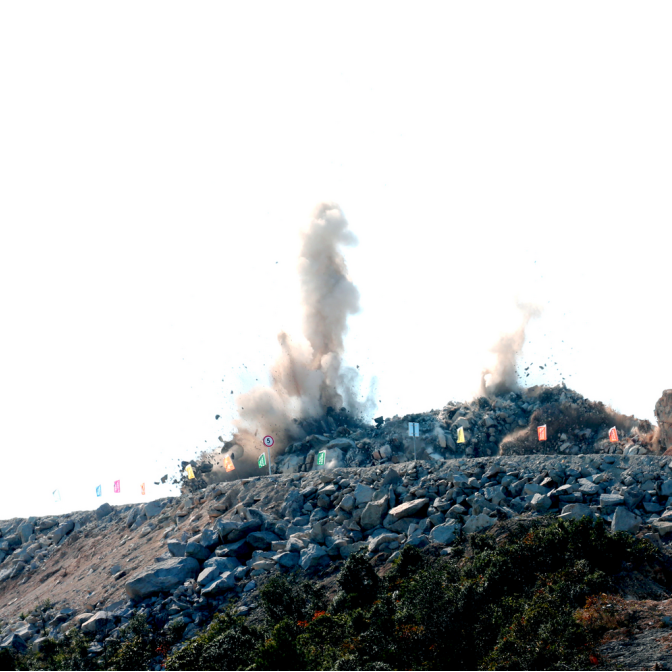
Pibsa emulsifiers for explosives
PRODUCTS CENTER
Features and characteristics
why choose us
get in touch
more products
Pibsa emulsifiers for explosives
cas67762-77-0
Description:
Factory-direct PIBSA emulsifier for emulsion explosives. CAS 67762-77-0. HLB 4-6, active >65%. Stabilizes W/O emulsions for bulk, packaged, and heavy ANFO explosives. Request TDS/MSDS.
Category:
Emulsifiers for Explosives
Product Details
Quick Specs
| Appearance | Brown yellow viscous liquid |
| CAS Number | 67762-77-0 |
| Active Content | >65% |
| HLB Value | 4–6 (W/O emulsion optimized) |
| Viscosity at 100°C / Density | >100 mm²/s / 0.90–0.95 g/cm³ |
| Packaging | 200 kg metal drum / 1000 kg IBC tote |
| MOQ | 1 drum / 1 IBC |
| Lead Time | 7–15 days after order confirmation |
What is PIBSA Emulsifier?
PIBSA — polyisobutylene succinic anhydride — is the molecule that makes modern emulsion explosives possible. It's the primary PIBSA-based explosive emulsifier, stabilizing the water-in-oil emulsion at the heart of every bulk and packaged PIBSA-based emulsion explosive used in mining, quarrying, and construction worldwide. CheMost supplies a full range of PIBSA products for explosives, from bulk emulsifiers to specialized grades.
An emulsion explosive is microscopic oxidizer salt droplets — ammonium nitrate dissolved in water — dispersed in a continuous oil phase. Without an emulsifier, the droplets coalesce within seconds. The emulsion breaks. Oxidizer and fuel separate. PIBSA prevents this. The succinic anhydride head anchors into each water droplet. The polyisobutylene tail extends into the oil. Droplets approach, the PIB tails interpenetrate, entropy pushes them apart. The emulsion holds. For the chemistry behind the molecule, read what is PIBSA and how is PIBSA made.
This is not the same PIBSA used as a dispersant intermediate in lubricant manufacturing. Explosive-grade PIBSA is formulated specifically for emulsification — optimized molecular weight, controlled HLB of 4–6, and minimized residual acidity. Residual acid in the PIBSA catalyzes ammonium nitrate emulsion breakdown. The manufacturing process controls this to a level that lubricant-grade PIBSA doesn't need to meet.
How PIBSA Stabilizes Emulsion Explosives
The Interface: Succinic Anhydride Head
Five-membered ring with two carbonyl oxygens — polar, orients into the water phase. Interacts with dissolved oxidizer salts through dipole-dipole and hydrogen bonding. Anchors the PIBSA molecule at each oxidizer droplet surface.
The Barrier: Polyisobutylene Tail
Saturated hydrocarbon chain, MW 500–1300 for explosive applications. Fully soluble in the fuel oil/wax continuous phase. Forms a steric barrier — when two droplets approach, the PIB tails interpenetrate and the resulting entropy penalty forces them apart.
The molecular structure is confirmed by FTIR spectroscopy. The carbonyl stretching vibrations of the succinic anhydride ring appear as a characteristic doublet at ~1780 cm&supminus;1 (asymmetric C=O) and ~1860 cm&supminus;1 (symmetric C=O). The C–O–C stretch of the anhydride ring appears near 1050–1100 cm&supminus;1. The polyisobutylene tail shows strong C–H stretching bands at 2850–2960 cm&supminus;1, with the geminal dimethyl groups (–C(CH3)2–) of the PIB backbone producing a distinctive doublet in the C–H bending region at ~1370 and ~1460 cm&supminus;1. This spectral fingerprint confirms the PIBSA structure: a saturated hydrocarbon tail terminated with a cyclic anhydride.

HLB 4–6 = W/O emulsion engineered sweet spot:
HLB (Hydrophilic-Lipophilic Balance) classifies emulsifiers. HLB 3–6 stabilizes water-in-oil emulsions. HLB 8–18 stabilizes oil-in-water emulsions. PIBSA's 4–6 is exactly where it needs to be for explosive emulsions where the water phase is 80–94% of the mass and the oil phase is only 6–20%. The molecular architecture of PIBSA — large hydrophobic PIB tail + moderately polar anhydride head — naturally lands in this range for the molecular weights used in explosive applications.
Technical Specifications
| Property | Unit | Typical Value | Test Method |
|---|---|---|---|
| Appearance | — | Brown yellow viscous liquid | Visual |
| Active Content | wt% | >65 | — |
| TBN | mgKOH/g | >8 | ASTM D2896 |
| Viscosity at 100°C | mm²/s | >100 | ASTM D445 |
| HLB Value | — | 4–6 | — |
| Density at 20°C | g/cm³ | 0.90–0.95 | ASTM D4052 |
* All values typical from published CheMost specifications. Batch-specific COA on request.
Key Features
HLB 4–6 — W/O Optimized
Engineered for water-in-oil emulsions where the water phase is 80–94%. The PIB tail/anhydride head architecture naturally delivers this HLB at the MW used for explosives.
Thermal Stability at 80–100°C
Emulsion manufacturing and borehole loading happen at elevated temperature. PIBSA's PIB tail provides a steric barrier that survives thermal Brownian motion — no coalescence during pumping.
Oxidizer-Compatible
Succinic anhydride head is stable in super-saturated AN solution. No hydrolysis to the di-acid under manufacturing conditions. Residual acidity controlled to prevent catalytic emulsion breakdown.
Shear-Stable During Pumping
Emulsion survives hose and nozzle shear rates. Arrives at borehole bottom with the same droplet size distribution it left the mixing tank with. No coalescence, no dead-pressed emulsion.
Months in Storage, Days in Boreholes
Packaged: 6–12 months without phase separation. Borehole: hours to days in wet conditions without crystallization or sensitivity loss. The emulsion stays detonable when the shot is fired.
Separate from Lubricant-Grade PIBSA
Different MW distribution. Different residual acidity spec. Different performance targets. Explosive-grade is formulated for emulsification, not as a dispersant intermediate.
Applications
Bulk Emulsion Explosives
Treat rate: 1–3%. Open-pit mining, quarrying, large construction. Manufactured on-site, pumped at 80–90°C into boreholes, sensitized with micro-balloons or gassing agents.
Packaged Emulsion Explosives
Treat rate: 1–2%. Cartridges and tubes for underground mining, tunneling, small-diameter blasting. 6–12 months shelf stability required.
Heavy ANFO
30–70% emulsion blended with ANFO. Water resistance + higher energy density. Used in wet blasting conditions where straight ANFO would fail.
Seismic Exploration
Small-diameter charges for seismic survey. PIBSA-stabilized emulsions provide the precise timing and consistent energy output seismic data acquisition depends on.
Compatibility
Ammonium Nitrate
Primary oxidizer. Stable emulsion at 80–94% water phase fraction.
Calcium / Sodium Nitrate
Supplementary oxidizers. Lower crystallization temperature. Compatible.
Fuel Oil / Wax Blends
Continuous phase. PIB tail fully soluble in diesel, mineral oil, and wax.
Sensitizing Agents
Micro-balloons (glass/polymer) and chemical gassing agents. Compatible with testing.
Synonyms & Regulatory Information
| Common Name | PIBSA Emulsifier |
| CAS Number | 67762-77-0 |
| Synonyms | Polyisobutylene succinic anhydride, Polyisobutenyl succinic anhydride, PIBSA explosive emulsifier, PIBSA mining chemical |
| HS Code | 3811.90 / 3402.13 |
| REACH | Registered |
Documentation
Contact us for Technical Data Sheet (TDS), Material Safety Data Sheet (MSDS), and batch-specific Certificate of Analysis (COA).
Frequently Asked Questions
Ready to Evaluate PIBSA for Your Emulsion Explosive?
Free 1 kg samples within 3 working days. Tell us your target emulsion composition and required stability lifetime.
Request Free Sample & TDS ⟶Last updated: May 6, 2026
Related Products
Previous
Previous
Why Choose Us
We believe that as long as we provide high-quality services to our customers, CheMost Additives CO., LTD's products will always gain the trust and support of our customers and have a stable market.

Our factory
We have over 20 professional chemical reactor,the annual production capacity of the products can reach 20,000 tons, while ensuring quality, we can provide stable and continuous supply.
Our warehouse
We are well aware that for the stable supply of chemical products, storage is the foundation. In the face of the ever-changing global market environment, a sustainable storage capacity is of vital importance.
Our laboratory
Long-term cooperation cannot be achieved without stable product quality. Under the supervision of over 20 pieces of testing equipment and 70 tests, the quality of the products is qualified and stable.
More Products
Key word:
PIBSA
Polyisobutylene succinic anhydride
PIBSA Emulsifiers
pibsa emulsifiers for explosives
emulsifiers for packaged explosives
pibsa products for explosives
pibsa emulsifiers
3D虚拟展馆
抖音官媒
旗舰微商城
微信公众号
CheMost
CheMost Additives CO.,LTD
ADDRESS: CheMost Additives CO.,LTD, Jinzhou city, Liaoning provice, China